Blog · Fundamentals
What is ITAD? A plain guide to IT asset disposition
IT asset disposition is how a company retires old laptops, phones and servers without leaking data or throwing away value. Here is how it works, step by step.
Every company buys IT hardware. Far fewer have a clear plan for what happens when that hardware is no longer needed. The laptop a leaver hands back, the phones from a refresh project, the servers pulled out of a closing office: all of it has to go somewhere. How you handle that moment is what the industry calls ITAD.
This guide explains what ITAD is, why it matters more than most people think, and what a good process actually looks like.
What ITAD means
ITAD stands for IT asset disposition. It is the process of retiring IT equipment in a safe, documented way at the end of its working life with you.
A good ITAD process does three jobs at once:
- It protects your data, so nothing private leaks off an old device.
- It recovers value, so you get money back for what still has worth.
- It stays compliant, so you can prove you did the right thing.
The word “disposition” is doing a lot of work there. It does not just mean throwing things away. It means deciding the right next step for each device, whether that is reuse, resale, or recycling.
Why it matters
It is easy to treat old hardware as junk. That is a mistake for two reasons.
First, the data. When you delete a file or even format a drive, the data is not really gone. It still sits on the disk and can be pulled back with free tools. Old drives sold second hand are found again and again with company files, customer records and passwords still on them. That is a data breach waiting to happen.
Second, the value and the carbon. A working three-year-old laptop is still worth real money, and it carries a large environmental cost that has already been paid. Most of a laptop’s lifetime carbon footprint, around 75 to 85 percent, comes from making it, not from using it. Every device you reuse instead of replace avoids that cost.
The scale of the problem is hard to ignore. The world produced 62 million tonnes of e-waste in 2022, and only about 22 percent of it was formally collected and recycled. The rest was burned, dumped or lost. ITAD is one of the few ways a single company can push against that trend and gain from it.
Done well, ITAD turns a risk and a cost into security, value and a cleaner footprint. Done badly, it is a quiet liability sitting in a storage room.
The ITAD lifecycle, step by step
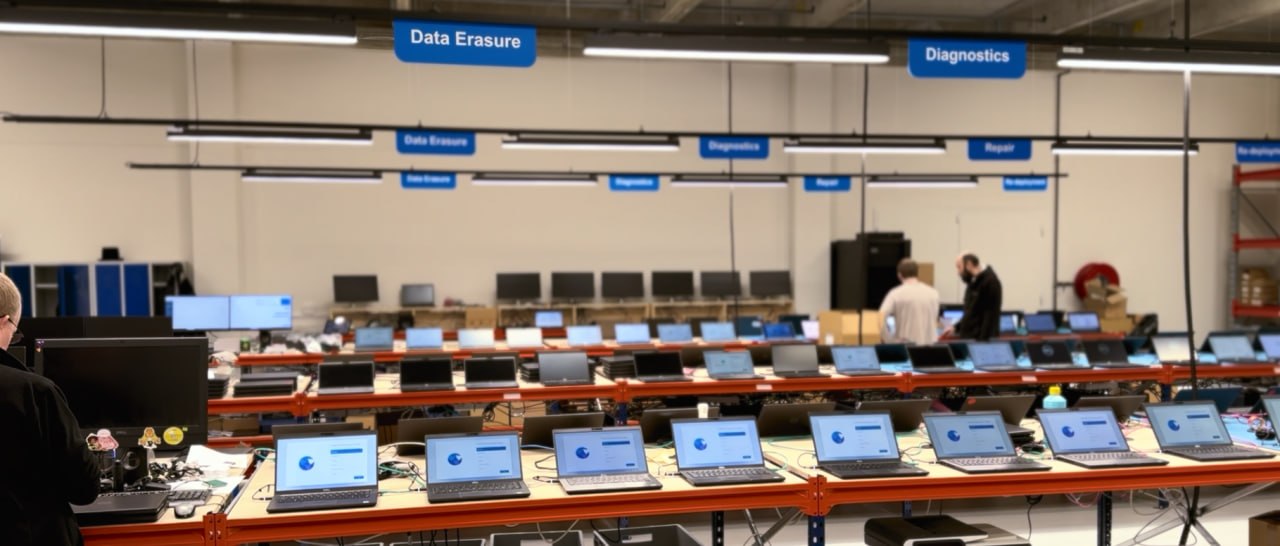
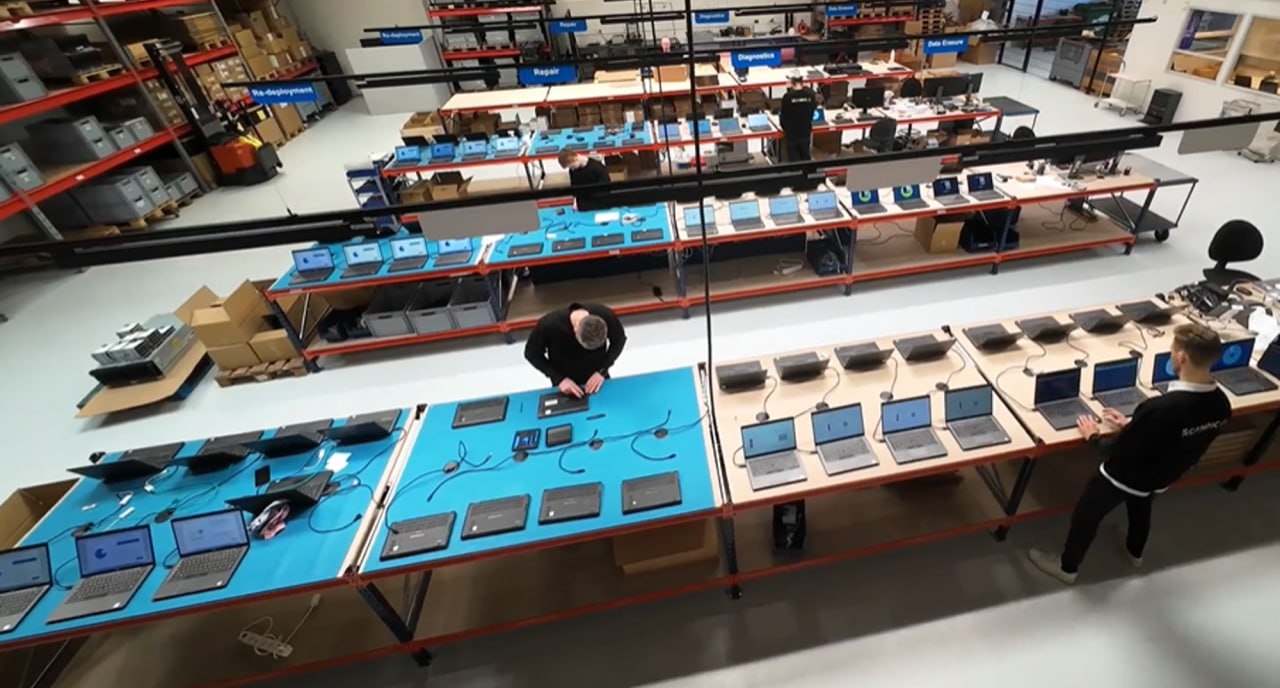
A solid ITAD process follows the same path for every device. At Scandic IT we group it into four stages: Collect, Secure, Recover and Recycle.
1. Collect
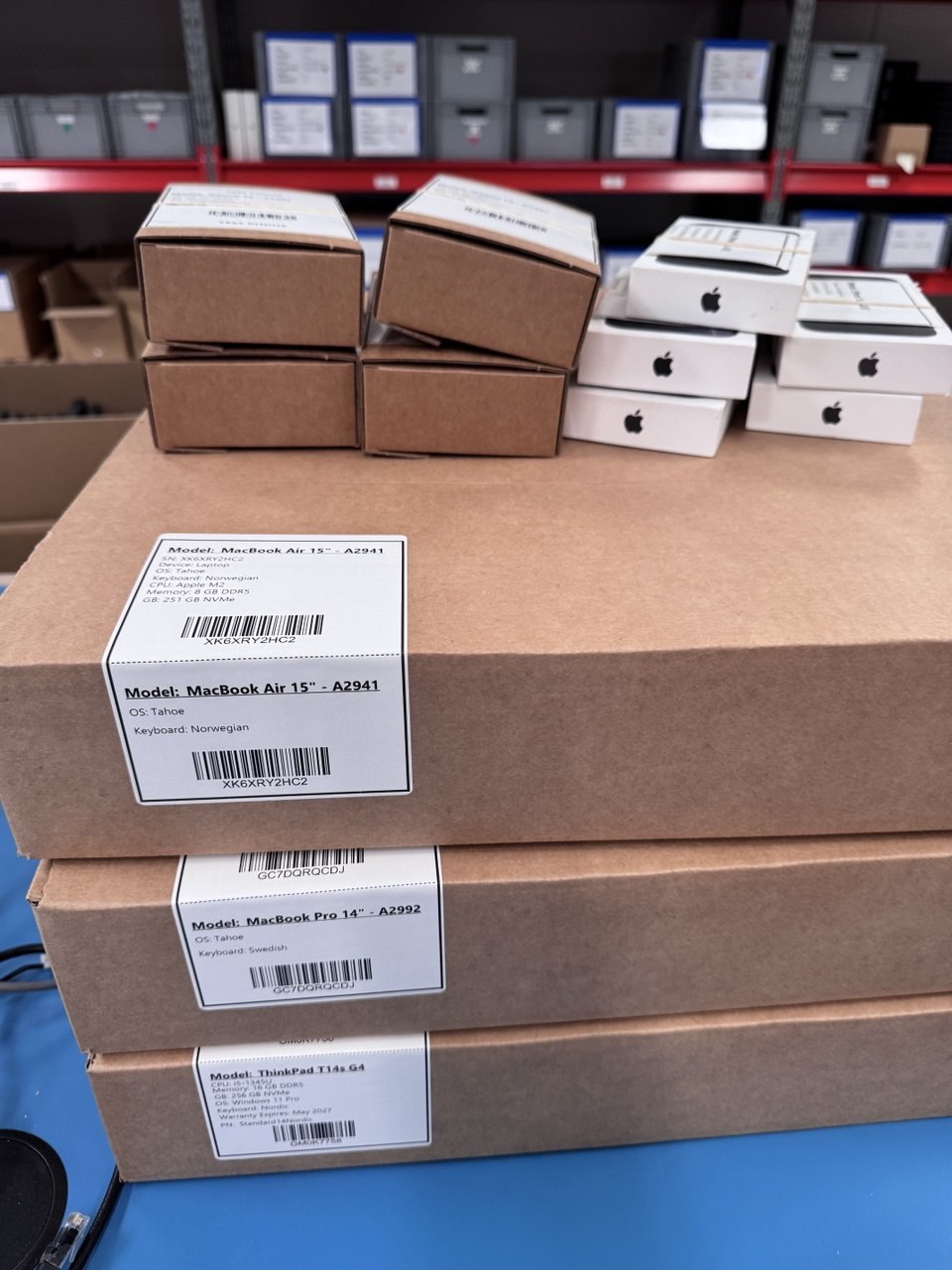
First the devices have to come back to one place. That sounds simple until your people are spread across offices and home desks. Good collection means tracked pickups, clear packaging and a record of every device that leaves a site. If you cannot say what you collected, you cannot prove what happened to it later.
This is where a Box Programme helps. A pre-paid kit goes to the employee, they pack the device, and you track it from their door to the depot.
2. Secure
Once devices arrive, the data has to be dealt with before anything else happens. That means certified erasure to a recognised standard, with a certificate for each device. Drives that cannot be wiped are physically destroyed. Only after this step is a device safe to move on. You can read more about how we do this on the security page.
3. Recover value
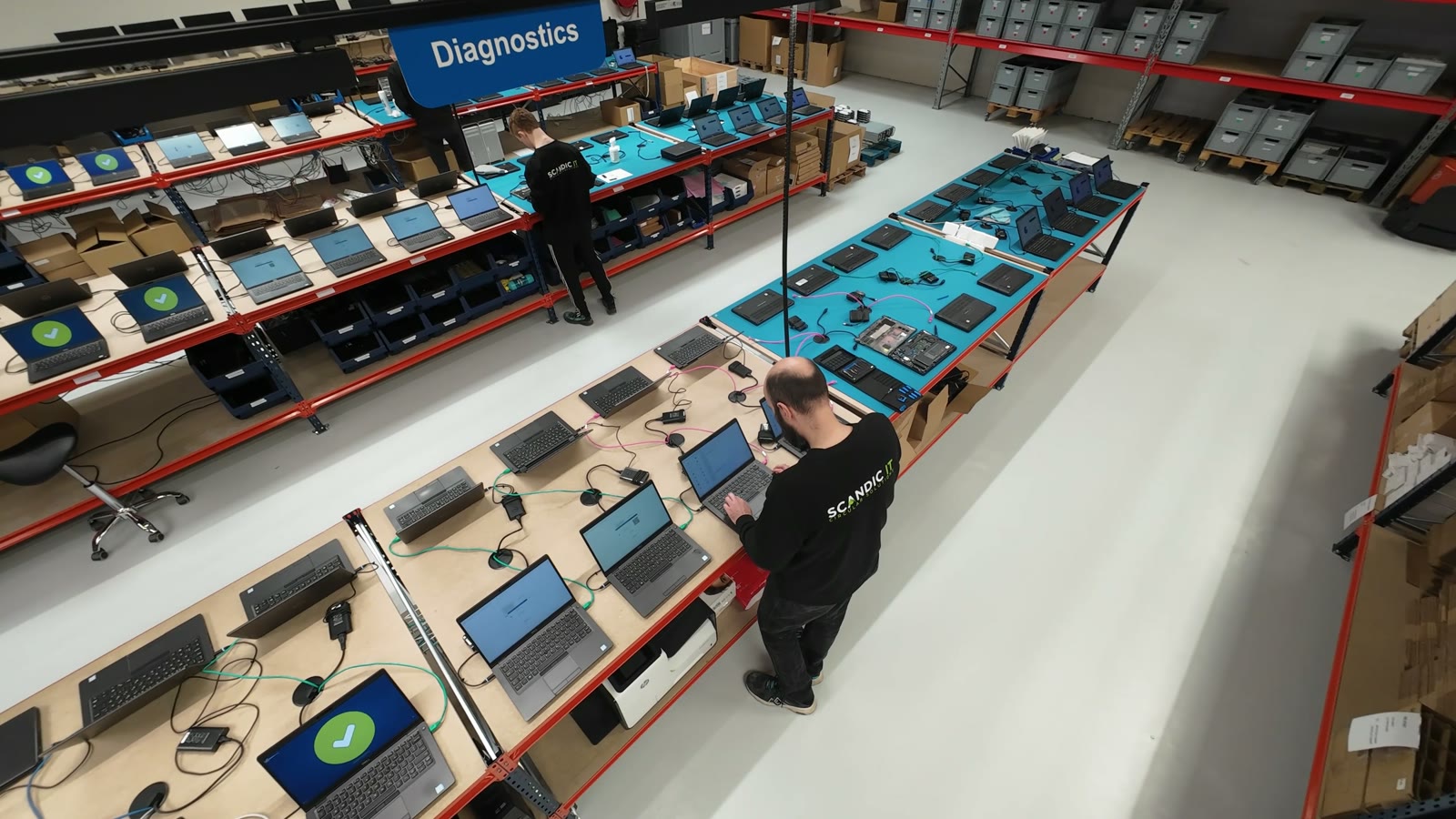
Now each device is tested and graded. The healthy ones have two good options:
- Redeployment. Send the device back into your own team. This is almost always the cheapest way to get a working machine to someone who needs one.
- Resale. If you do not need it, it can be refurbished and resold so you get money back.
Repairs and light refurbishment happen here too, because a clean, working device is worth far more than a tired one.
4. Recycle
Whatever cannot be reused is recycled responsibly, with a clear trail showing where the materials went. This is the last resort, not the default, because reuse beats recycling on both value and carbon.
The four routes a device can take
Every device ends up on one of four paths. Here is how they compare.
| Route | What happens | Value back | Best for |
|---|---|---|---|
| Redeploy | Wiped and returned to your team | Highest (avoids a new purchase) | Devices you still need |
| Resell | Refurbished and sold on | Medium to high | Good devices you do not need |
| Recycle | Broken down for materials | Low | Devices with no working life left |
| Destroy | Physically shredded | None | Drives that must not survive |
A good ITAD partner does not push everything down one route. They look at each device and pick the path that gives you the most value while keeping your data safe.
What to look for in an ITAD partner
If you are choosing who to trust with this, a few things matter more than price.
- Certifications you can check. Look for ISO/IEC 27001 for information security and ISO 9001 for quality, audited by an independent body.
- A certificate for every device. Not a blanket statement. Real, per-device proof of erasure or destruction.
- One chain of custody. The fewer hands your devices pass through, the lower the risk. A partner who does the whole job in house can show you the full trail.
- Honest reporting. You should get clear numbers on what was reused, resold and recycled, not a vague summary.
The short version
ITAD is simply the right way to retire IT hardware. It keeps your data safe, gets value back from what still has worth, and keeps you on the right side of the rules. The companies that treat it as an afterthought are the ones that get caught out, either by a data breach or by throwing away money and good machines.
If you want to see what this looks like for your own fleet, request a quote and we will map out the right path for you.
Written by
Kasper Horn Nielsen
Co-founder & Managing Director, Scandic IT
Kasper leads Scandic IT and has worked in the IT asset industry since the mid-2000s. He writes about data security, compliance and how to get more value out of company hardware.